
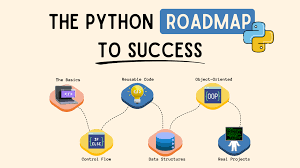
The Complete NumPy Roadmap
The Complete NumPy Roadmap
NumPy (Numerical Python) is one of the most important libraries in Python for data science, machine learning, and scientific computing. It provides powerful support for multi-dimensional arrays and fast mathematical operations, making it the foundation of most data-related Python workflows.
1. Getting Started with NumPy
The first step in learning NumPy is understanding arrays. Unlike Python lists, NumPy arrays are faster, more efficient,
and optimized for numerical operations. You should learn how to create arrays using np.array(),
np.zeros(), np.ones(), and np.arange().
2. Array Operations and Broadcasting
NumPy allows element-wise operations, which means you can perform arithmetic directly on arrays without loops. Broadcasting is a key concept where NumPy automatically adjusts array shapes to perform operations efficiently. This is essential for high-performance computing.
3. Indexing and Slicing
Just like Python lists, NumPy supports indexing and slicing, but with more flexibility. You can access specific rows, columns, or sub-matrices using powerful slicing techniques. Boolean indexing also allows filtering data based on conditions.
4. Mathematical and Statistical Functions
NumPy provides a wide range of built-in functions such as mean, median, standard deviation, sum, and product. These functions are optimized for performance and are widely used in data analysis and machine learning preprocessing.
5. Reshaping and Manipulation
Reshaping arrays using reshape(), flattening using ravel(), and stacking arrays are important skills.
These operations help in preparing data for machine learning models.
6. Linear Algebra and Advanced Features
NumPy includes powerful linear algebra functions such as matrix multiplication, determinant calculation, and eigenvalues. These are widely used in AI, physics simulations, and engineering problems.
7. Real-World Applications
NumPy is used in data science pipelines, image processing, financial modeling, and machine learning frameworks like TensorFlow and Scikit-learn. Its speed and efficiency make it essential for handling large datasets.
Conclusion
Mastering NumPy is a critical step for anyone entering data science or AI. From basic array creation to advanced mathematical operations, NumPy provides the backbone for efficient numerical computing in Python.